
Hangzhou Gaoke Industry&trade Co., Ltd.
Time:2026-02-12 Click:1429 seen
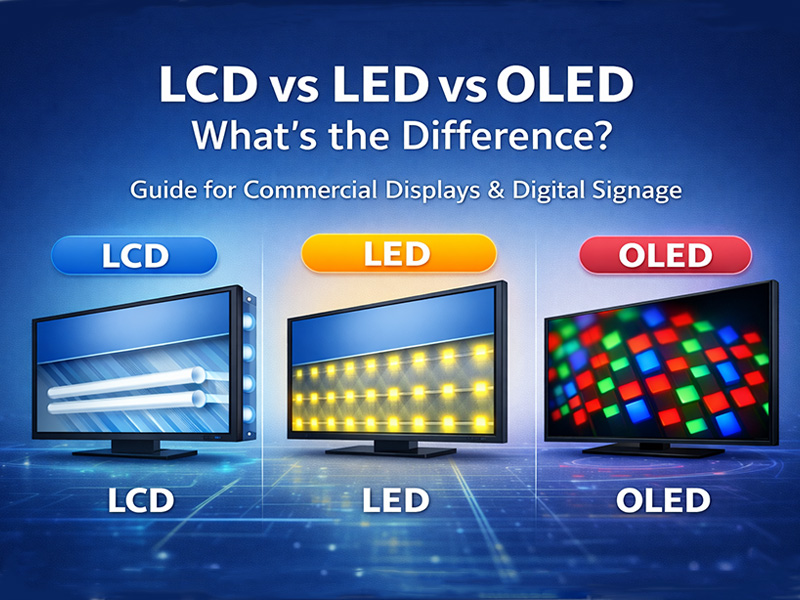
When evaluating modern display technology for commercial digital signage, interactive flat panels, conference room systems, or large-scale outdoor LED screens, many buyers encounter the terms LCD, LED, and OLED and assume they represent completely separate categories. In reality, LCD vs LED vs OLED is not simply a matter of one being newer or better than the others. Each display technology operates differently at the structural level, and each serves a specific role within professional and commercial environments. Understanding these differences is essential for distributors, system integrators, project contractors, and corporate buyers who want to make informed purchasing decisions.
LCD, or Liquid Crystal Display, is the foundational technology behind most commercial flat panel displays used worldwide. An LCD display does not emit light by itself. Instead, it relies on a backlight system positioned behind a liquid crystal layer. The liquid crystals act as shutters that regulate how much light passes through each pixel. Color filters then generate red, green, and blue subpixels to create the final image. Because LCD technology depends on a backlight, overall performance—including brightness, energy efficiency, and panel thickness—is influenced by the type of backlighting system used.
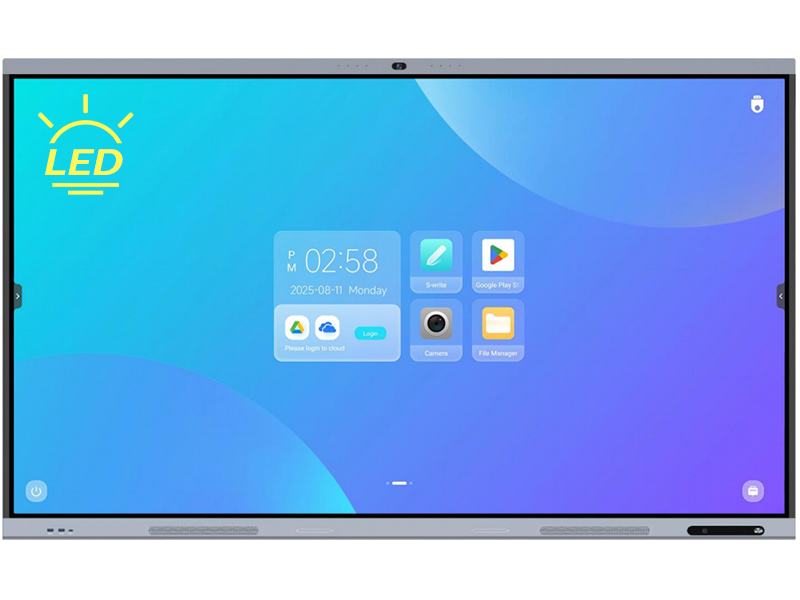
Most modern displays marketed as LED displays are actually LED-backlit LCD displays. This distinction is critical in any LCD vs LED comparison. In these systems, the LCD panel remains responsible for image formation, while light-emitting diodes replace older CCFL backlights to improve brightness, reduce power consumption, and enable thinner designs. LED-backlit LCD displays dominate the global commercial display market because they offer a strong balance between performance, durability, and cost efficiency. For indoor digital signage, education interactive flat panels, retail advertising screens, and conference room displays, LED-backlit LCD technology provides stable image quality and long operational lifespan, making it ideal for continuous commercial use.
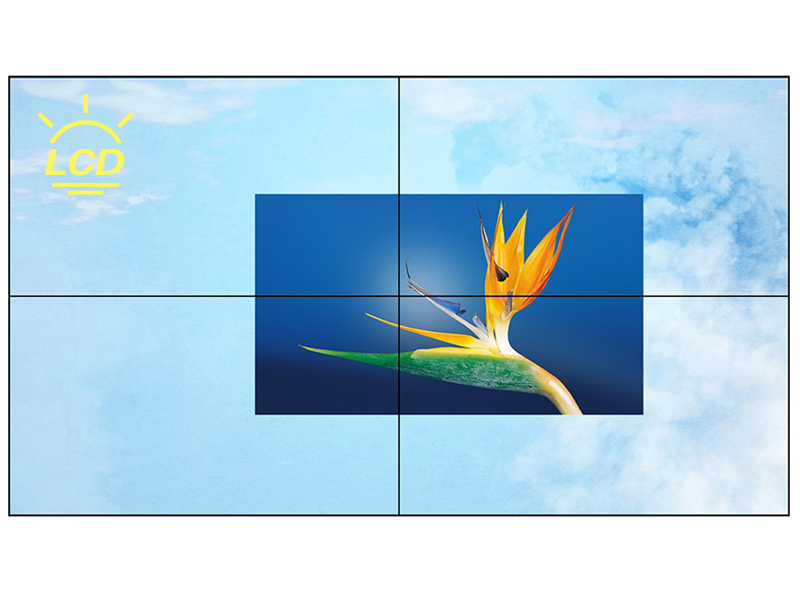
When the term LED display is used in large-scale advertising or outdoor applications, it often refers to Direct View LED technology. Unlike LCD displays, Direct View LED screens do not use liquid crystals or a backlight system. Each pixel consists of individual red, green, and blue LED chips that emit light directly. Because Direct View LED is self-emissive, it can achieve extremely high brightness levels, often exceeding 5000 nits, which makes it the preferred solution for outdoor LED billboards, stadium displays, transportation hubs, and large architectural media facades. The modular structure of Direct View LED panels allows seamless video walls of virtually unlimited size, eliminating bezel lines commonly found in LCD video wall systems.
However, while Direct View LED offers superior brightness and scalability, it also involves higher upfront investment, more complex installation requirements, and careful consideration of pixel pitch. Pixel pitch determines image clarity relative to viewing distance. For indoor close-view applications, fine-pitch LED displays are required, which significantly increases project costs. Therefore, in a practical LED vs LCD decision for indoor environments, LCD displays often remain the more cost-effective and operationally efficient choice.
OLED, or Organic Light Emitting Diode, represents another form of self-emissive display technology. Unlike LCD displays that require a backlight, each OLED pixel generates its own light through organic compounds that illuminate when electrically stimulated. This allows OLED displays to achieve true black levels by completely turning off individual pixels, resulting in exceptional contrast ratios and deep color reproduction. From a visual standpoint, OLED screens are widely recognized for their image quality, especially in premium consumer televisions and high-end retail installations.
Despite these visual advantages, OLED display technology has limitations in commercial digital signage environments. Organic materials naturally degrade over time, particularly when exposed to static content. In applications that require 24/7 operation, such as advertising loops or information boards with fixed logos and layouts, OLED panels may experience image retention or burn-in. Additionally, peak brightness levels of OLED screens are generally lower than those of Direct View LED displays, making OLED less suitable for high ambient light or outdoor digital signage scenarios. For these reasons, OLED is typically selected for premium indoor installations where design aesthetics and cinematic contrast outweigh long-term static display requirements.
From a commercial perspective, the LCD vs LED vs OLED comparison should focus less on marketing terminology and more on application requirements. For education environments using interactive flat panel displays, LCD technology with LED backlighting provides consistent brightness, anti-glare performance, and stable operation for daily classroom use. For corporate meeting room solutions and touch screen conference systems, LCD-based interactive displays deliver reliable performance without the risk of burn-in. For outdoor advertising screens and large public information displays, Direct View LED remains unmatched in brightness and weather resistance. For luxury retail showrooms or high-end visual showcases, OLED may deliver superior visual depth and design elegance.
Globally, LCD display technology continues to hold the largest market share in commercial applications because it offers predictable manufacturing standards, mature supply chains, and proven durability. The perception that LED or OLED has fully replaced LCD often arises from simplified marketing language rather than engineering reality. In fact, LED-backlit LCD remains the backbone of most commercial digital signage networks, interactive education boards, and corporate display systems deployed worldwide.
As display technology evolves, innovations such as Mini-LED backlighting and Micro-LED self-emissive panels continue to blur the boundaries between traditional categories. Mini-LED enhances LCD performance by improving local dimming and contrast control, while Micro-LED aims to combine the brightness advantages of LED with the pixel-level control of OLED. However, these technologies are still developing in terms of large-scale cost efficiency and commercial accessibility. For most practical business applications today, LCD and Direct View LED remain the dominant and most scalable solutions.
In conclusion, the question is not whether LCD, LED, or OLED is universally better, but which display technology aligns with the intended environment, operating duration, budget, and viewing conditions. LCD displays offer balanced performance and long-term reliability for indoor commercial use. Direct View LED delivers unmatched brightness and scalability for outdoor and large-format projects. OLED provides premium visual contrast for specialized high-end installations. By understanding these structural and operational differences, buyers can select the most suitable display solution for their commercial objectives while optimizing total cost of ownership and long-term performance.

Hangzhou Gaoke Industry&trade Co., Ltd.


+8613706719639


A6 Cainiao Zhigu, Yuhang District, Hangzhou, Zhejiang, China




 中文
中文 English
 +86(571)89986945
 +8613706719639
 +8613706719639
 service@hz-gaoke.com
